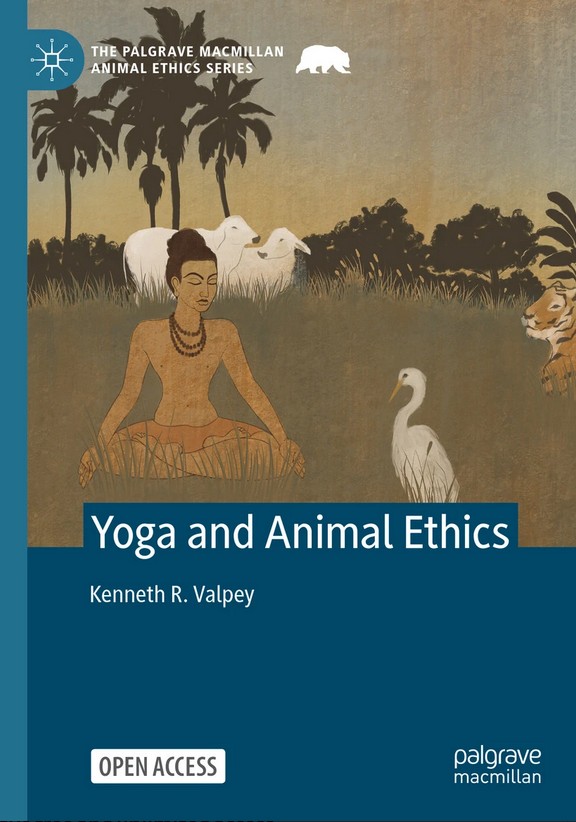
About the Yoga and Animal Ethics book

By Kenneth R. Valpey

Series: The Palgrave Macmillan Animal Ethics Series

In recent years, the climate crisis and environmental devastation have ignited discourse on the dangerous vision of the “ideal human” that emerged in the early modern era and has taken on the flavor of technofeudalism in recent years.

This is a vision that elevates the ideal of the (presumed) unrelated, unconditioned, radically independent human, grounded in the denial of our interdependence with the living systems of the Earth in general, and our interconnection with animal species in particular. The sentience, personhood, agency, and intrinsic worth of non-human animals are undermined by the hyper-rationalist vision of humanism, laying bare their lives for exploitation and execution.

The Anthropocene, with its sixth mass extinction, a rapidly escalating climate emergency, and the breach of the planet’s bio-geophysical integrity requires a critical assessment of what it means to be fully human—and this entails a thoroughgoing reevaluation of our relationship with nonhuman animals.

Important theories, such as critical posthumanism, are theoretical interventions that question the norms, privileges, and boundaries of the “human.” To find a way forward in a time of civilizational and ecological crises, the discursive oppositions of critical frameworks suggest a need for the erasure of human exceptionalism and its replacement by an integrative inclusivism of the ecosphere.

In recent years, alternate epistemologies—ones that extend the concept of sentience and intrinsic value to the more-than-human world—have emerged. This is evident in a number of theoretical rubrics, such as New Materialism and Object Oriented Ontology, which emphasize the agency and internal integrity of animals as well as natural phenomena and habitats, and even the self-organizing capacity of matter in itself.

The Palgrave Macmillan Animal Ethics SeriesISSN 2634-6672 ISSN 2634-6680 (electronic)

The Palgrave Macmillan Animal Ethics Series

ISBN 978-3-031-93360-8 ISBN 978-3-031-93361-5 (eBook)

https://doi.org/10.1007/978-3-031-93361-5

© The Editor(s) (if applicable) and The Author(s), under exclusive license to Springer Nature Switzerland AG 2025. This book is an open access publication.

Open Access This book is licensed under the terms of the Creative Commons Attribution 4.0 International License (http://creativecommons.org/licenses/by/4.0/), which permits use, sharing, adaptation, distribution and reproduction in any medium or format, as long as you give appropriate credit to the original author(s) and the source, provide a link to the Creative Commons license and indicate if changes were made.

The images or other third party material in this book are included in the book’s Creative Commons license, unless indicated otherwise in a credit line to the material. If material is not included in the book’s Creative Commons license and your intended use is not permitted by statutory regulation or exceeds the permitted use, you will need to obtain permission directly from the copyright holder.

The use of general descriptive names, registered names, trademarks, service marks, etc. in this publication does not imply, even in the absence of a specific statement, that such names are exempt from the relevant protective laws and regulations and therefore free for general use.

The publisher, the authors and the editors are safe to assume that the advice and information in this book are believed to be true and accurate at the date of publication. Neither the publisher nor the authors or the editors give a warranty, expressed or implied, with respect to the material contained herein or for any errors or omissions that may have been made. The publisher remains neutral with regard to jurisdictional claims in published maps and institutional affiliations.

This Palgrave Macmillan imprint is published by the registered company Springer Nature Switzerland AG.

The registered company address is: Gewerbestrasse 11, 6330 Cham, Switzerland
Praise for Yoga and Animal Ethics

“The yamas lie as the foundation of morality for almost all yoga systems of India. And the foundation of the yamas, in turn, is ahiṃsā, non-violence. It is like the elephant footprint which covers the footprints of all other animals, says the great commentator Vyāsa—if there ever is a moral conflict between the other yamas and ahiṃsā, the latter must always prevail. And it is important for those considering themselves practitioners of yoga outside of India to engage the fact that ahiṃsā’s application to non-human creatures was a given in Indic yoga circles. It was so normative and assumed, it barely required any explication in yoga commentary. Unlike much modern discourse promoting the self-centered advantages of a vegan or vegetarian diet—one’s personal health, or the massive global environmental or grain redistribution benefits—Indian ahiṃsā sensitivities stemmed from compassion for the suffering of other non-human fellow creatures.

In this timely volume, Valpey creates a bridge between transplanted yoga discourse, animal ethics, and environmental solution-making. In the Yoga Sūtras, the canonical text of Yoga, ahiṃsā is non-negotiable for anyone identifying as any sort of a yoga practitioner, so Yoga and Animal Ethics provides robust yoga-derived research and insights that will deepen yoga practitioners’ understanding of yoga as a path of self-discovery that cannot be separated from the treatment of nonhuman beings. Indeed, true yogis should be at the forefront of animal rights activism, and this volume invites general readers to consider viable yoga-based ways to contemplate and interact ethically with animals.

Valpey is to be commended for bringing one of the most pressing concerns of our days into dialogue with the rapidly growing spread of yoga practices. As with the author’s other works, Yoga and Animal Ethics is a well-written, carefully thought out and long-overdue volume that merits a place on every yogi’s book shelf.”

Kenneth Valpey’s Yoga and Animal Ethics is a pioneering exploration that weaves together the philosophical richness of yoga traditions with the ethical imperative of reimagining human-nonhuman relationships. Given the pervasiveness of yoga cosmological principles in the worldviews of South Asian origin, this work is an invaluable contribution to understanding how deeply embedded cultural frameworks can reshape ethical paradigms in contemporary societies.

Drawing on the Yoga Sūtra, the Bhagavad gītā, and the Bhāgavata Purāṇa, Valpey reveals yoga not merely as a practice of self-discipline but as a profound, multi-layered process of self-transformation that challenges anthropocentric worldviews. Thus yogic concepts such as ahiṃsā or nonviolence serve as a foundational ethic for interspecies relationality, redefining the moral imagination of contemporary yoga practitioners. This perspective moves beyond Western individualistic wellness trends and popularized postural forms, situating yoga in its original Indic context as a practice deeply attuned to the welfare of all living beings.

Valpey skillfully situates the rise of yoga and its ethical dimensions within the broader historical context of India’s transition from ritual animal sacrifice to internalized, nonviolent practices. This historical shift, rooted in the ethos of ahiṃsā is emblematic of a broader reimagining of human-animal relations. It resonates profoundly with the global need for sustainable and ethical living, as cultures are increasingly being called upon to redefine their relationships with the natural world. By linking ancient Indic traditions to modern environmental challenges, the book underscores yoga’s enduring relevance as both a cultural and philosophical resource.

The book’s emphasis on the interplay between philosophical inquiry, embodied practice, and ecological responsibility opens a much-needed conversation in both yoga studies and animal ethics. By foregrounding the relational and transformative dimensions of bhakti-yoga, Valpey invites readers to envision a world where devotional practices foster inclusive communities that extend care to all beings.

This study will resonate not only with scholars and yoga practitioners but also with anyone seeking a more integrated and ethically grounded approach to environmental and animal welfare. It is an essential read for those committed to exploring the intersections of culture, spirituality, and ethical action.

This excellent book offers an account of animal ethics in terms of yoga, arguing that we neglect animal welfare at our peril and that the ethics of yoga provides a way forward. This is an important book and a must read for all interested in ethical concern for animals.

Yoga and Animal Ethics is a profound and timely contribution to both yoga philosophy and animal ethics. Kenneth Valpey masterfully weaves together classical texts, including the Yoga Sūtra, the Bhagavadgītā, and the Bhāgavata Purāṇa, to illuminate how yoga’s foundational principles—ahiṃsā (non-harming), discipline, devotion, and self-transformation—offer a transformative ethical framework for human-nonhuman relations. By connecting yoga’s deep spiritual insights with pressing environmental and ethical concerns, Valpey challenges readers to expand their moral imagination and engage in ‘beautiful action’ that fosters compassion for all beings. His nuanced discussion of bhakti-based care ethics and leadership provides a refreshing and much-needed perspective in both yoga studies and animal ethics discourse. This book is essential reading for scholars, practitioners, and anyone seeking a holistic approach to ethics that bridges the inner work of yoga with the outer work of environmental and social responsibility. A truly enlightening and inspiring read.

Noting that our social settings are suffused with the idioms of ‘yoga’ and ‘animal ethics,’ Kenneth Valpey asks a momentous question: what types of resources can Hindu practices of self-transformation provide towards recalibrating our relations with the nonhuman beings that populate our shared world?

Drawing on an array of texts such as Patañjali’s Yoga-sūtra, the Bhagavad-gītā, and the Bhāgavata-purāṇa, Valpey highlights the cultivation of the virtue of attentive awareness as pivotal to the reorientation of our moral compass to animals. By decentering our anthropocentric presuppositions on horizons of continuity across divine, human, and animal domains, we may yet be able to recover our fundamental kinship with the presence of personality in the world. In this work, animated both by careful textual scholarship and by deep spiritual sensibility, Valpey evocatively situates therapeutic practices of re-yoking under a spiritual canopy that would shepherd an all-inclusive freedom.

I am pleased to endorse Valpey’s thought-provoking book, Yoga and Animal Ethics, an important work at the intersection of animal studies, vegan advocacy, and yoga studies. This book provides a compelling basis to question the ethics of exploiting animals in our food production, particularly commercial dairy cows. Valpey’s nuanced exploration of the complexities surrounding dairy consumption is both informative and inspiring. Readers will appreciate his commitment to minimizing harm to animals and promoting compassion in our food choices. As someone who advocates for a strict vegan stance, I value Valpey’s willingness to engage with different perspectives and find common ground. His strategy for promoting ahiṃsā (non-harm) has the potential to inspire meaningful change and cultivate a more compassionate and sustainable lifestyle, a vision that must account for the suffering of animals in our patterns of consumption.

This book is not only a valuable resource for scholars of animal studies, vegan advocacy, and yoga studies but also for spiritually inclined practitioners of yoga. Moreover, Valpey’s work highlights the importance of understanding food ethics and abstention from animal consumption as an integral part of one’s spiritual path. By exploring the intersections of yoga, ethics, animal welfare, and food production, Valpey’s book offers a unique perspective on the spiritual implications of our food choices. This is essential reading for anyone seeking to deepen their understanding of yoga as a holistic practice that encompasses physical, mental, and spiritual well-being. I highly recommend Yoga and Animal Ethics to anyone interested in promoting a more just, sustainable, and compassionate world.

Yoga and Animal Ethics by Kenneth Valpey is a groundbreaking and much-needed work that reorients our understanding of yoga by placing animals and the environment at the heart of the tradition’s ethical teachings. Valpey’s adept handling of classical Sanskrit sources—combined with lucid analysis of modern ethical discourse—makes this book a must-read for scholars and practitioners alike. It expertly navigates the historical landscape of Vedic ritual, classical Yoga texts, and devotional theology, revealing how yoga, in principle and practice, prompts a profound rethinking of our relationships with nonhuman animals. In an era when ethical and ecological concerns are paramount, this work stands out both for its scholarship and its relevance. It is a thoroughly researched, engaging text that pioneers an important conversation on animal ethics from a yoga perspective. I highly recommend this text for ethics and religion courses in college classrooms.

Yoga and Animal Ethics is a very well researched book, which excites one’s curiosity about a rare combination of subjects: yoga and animal ethics. The author has attributed the change of ancient Vedic rituals involving animal sacrifice to a more benign bhakti system or worship inspired by yoga. This is a very original idea and has been developed very well with reference to several primary and secondary sources. It is very well researched and presented and will definitely excite a lot of attention and readership.

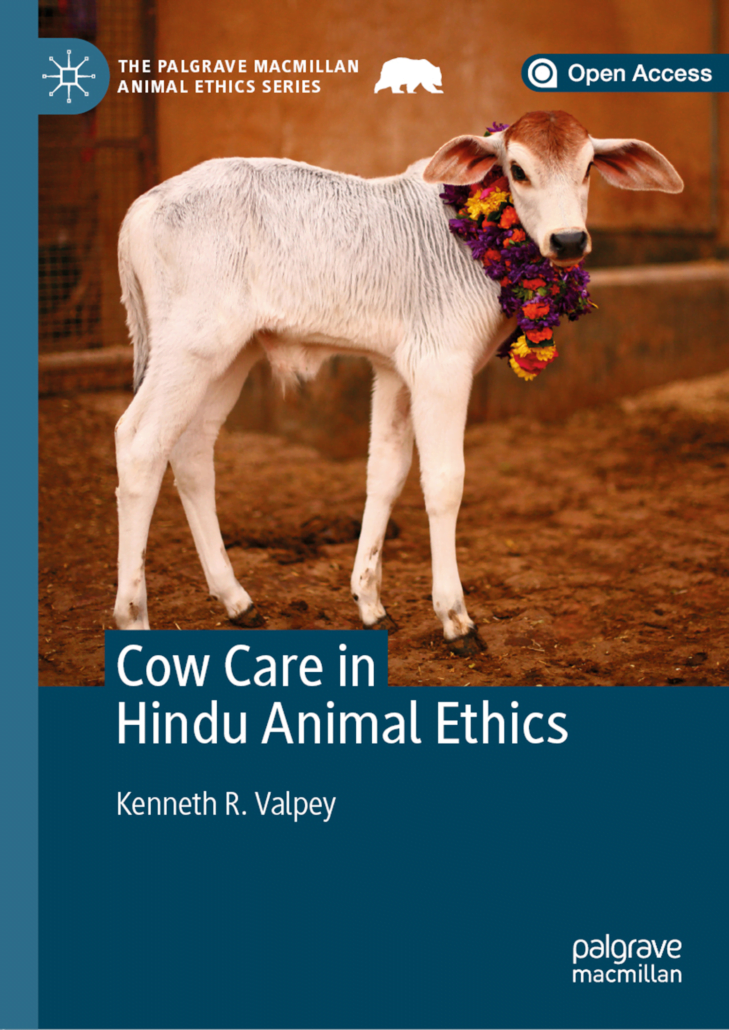
About the Cow Care in Hindu Animal Ethics book

The most pressing issue facing our world today is the climate crisis.

Factory farming – specifically the beef industry – is considered one of the main contributors to climate change, prompting many activists and conscientious citizens to rethink their consumption of beef and dairy entirely. But what if there was a more considerate way to interact with cows – one that met the needs of both humans and the planet? Kenneth Valpey’s COW CARE IN HINDU ANIMAL ETHICS examines how the welfare of human civilization is inextricably linked to the care and protection of the cow.

The book begins with a fascinating journey through India’s oldest texts in search of early references to the cow and its relation to human society – from the Rigveda to the Bhagavata Purana to medieval bhakti poetry.

From there, Valpey reviews ideas of prominent modern Indian thinkers, providing a penetrating glimpse into the country’s current cow care practices.

In the book’s most philosophical chapter, Valpey proposes an animal ethic that combines Western ethics-of-care and environmental thinking with India’s traditions of: dharma (the sense of duty toward all living beings), yoga (the fostering of virtues such as non-violence, culminating in liberation), and bhakti (the channeling of one’s devotion toward the supreme, leading to a deep sense of relationality with all creatures).

Drawing upon a rich blend of cultural studies, intellectual history, and original fieldwork, Valpey suggests the need for practical action to develop models of sustainable cow care communities – action energized by knowledge, inspiration, and the vision of a future society in which cows are protected, not slain.

The Cow Care Book

By Kenneth R. Valpey

Series: The Palgrave Macmillan Animal Ethics Series

Praise for Cow Care in Hindu Animal Ethics

There have been other books on cows and their role and importance in Hindu culture. But typically, their range is narrow. Kenneth Valpey’s book is not only extremely well-written and engrossing, its range and scope is breath-taking—from Hindu culture on cow-care to the contemporary, from texts to the temporal. It is a story told by someone who is steeped in the bhakti tradition, but testable propositions (such as on the efficacy of bovine products) are examined with the lens of a scientist and empiricist. But the objective of animal care isn’t only about an esoteric ideal. Therefore, towards the end, there are examples of how cow-care works in specific communities. A wonderful book that everyone, not just every Indian, should read. Attitudes of arrogance, fuelled by ignorance, will then be somewhat tempered.

It takes special scholarship, sensitivity and courage for understanding the cow, a unique bovine creature. To call the cow merely an animal is considered heresy for Hindus, when the cow is not only mother, but also a refuge for all the Hindu gods and goddesses. The cow embodies Mother Earth and the bull embodies dharma. The cow is a grand stage on which economy and spirituality, rituals and aesthetics, life and death all play out their truths. In this comprehensive study, Dr. Kenneth Valpey lucidly reveals this complex phenomenon, covering textual traditions to contemporary practices and issues.

This fascinating book highlights the historical underpinnings for much of the present-day evidence of the continued importance of the cow in some cultures and countries; that is, the cow as a sentient animal, as a spiritual/divine/magical being and as a symbol of what can seem an infinite number of things, not least of all other animal life.

The notion of the significance of the cow has found its way into yoga too—for example through cow-named yoga postures, cow-based mythology, cow-based spirituality, cow-oriented chants, the teaching of ahimsa, the belief in karma and the promotion of the sattwic illumined nature in practitioners that cows are believed to embody. As sincere yoga practitioners and teachers, I feel we are morally compelled to gain an ever deeper understanding of the cultural roots from which yoga has emerged and in which the practice remains embedded. It is also wise to gain a nuanced appreciation of the past and extant cultural sensitivities connected to yoga.

This book most certainly helps with these endeavours. It pays homage to what has come before, weaving insights from different sources seamlessly and offering new considerations for contemporary times and the future. Most importantly, in the context of millions and millions of cows continuing to suffer or face injustices throughout the world today under human hand and society, this book recognises cows as victims and as individuals. Concern about the welfare of cows remains ever-present as you journey through the chapters, and it is afforded the high profile it deserves. I would wholeheartedly recommend this priceless gem.

A thoroughly researched and most timely book analyzing the placement of the cow throughout Hindu culture, and its potential role in human well-being more broadly. While the growing Western animal rights movement is primarily based in human-centric concerns, and the protection of animals objectified and valued in terms of benefits to human health, diet, ecology and environment, Valpey introduces us to the notion of the cow as subject and as citizen in its own right. Using traditional as well as modern theoretical frames of references, Valpey leads us to the inexorable conclusion that the welfare of human civilization and cow protection are inextricably linked.

There has been growing academic interest in the more-than-human these days, and this certainly includes nonhuman animals. The cow within Hinduism has been either regarded as the most special of animals, or even as the representative of all animals. Kenneth Valpey has produced a wonderful book that invites us to look at cows as “subjects,” and explores the special nature of them from a wide variety of sources within India. In so doing, he offers a very thoughtful ethical perspective for our consideration. Those interested in the larger field of animal ethics will find much of value in this book.

An extensive and nuanced meditation on the relationship between human and animal kingdoms in India and the world at large: this volume examines the philosophical underpinnings of the ethics of cow care and protection in India and goes on to make a credible environmental case for their contemporary implementation. It offers a very rich blend of cultural studies, intellectual history, and environmental awareness and will clearly develop and deepen the discourse on inter-species dharma.

The cow is integral to the economic, cultural and spiritual well being of Hindus and is central to the natural, human and divine spheres of life, which interrelate for mutual benefit. Kenneth Valpey’s book ‘Cow Care in Hindu Animal Ethics’ discusses the historical and current issues that surround the cow as a sacred animal in Indian culture. It highlights how both dharma and bhakti are balanced in the daily care of cows, requiring the long term well-being of all animals, with the human—cow relationship as a starting point. The book is well researched on Hindu animal ethics from the Vedic to the contemporary and is an important contribution to our knowledge of the co-operation between human beings and the animal world.

This is a path-breaking book that deserves to be widely read. Valpey expands our understanding of animal ethics and complexifies our notion of devotion. Original and thought-provoking, this book will open up new venues for discussion and reflection regarding cow care.

Get a free open access copy of the book

The Cow Care books

The Cow Care in Hindu Animal Ethics book is now available both as an electronic version and hard bound. If You are interested get a copy using the links below.

The Palgrave Macmillan Animal Ethics Series
ISBN 978-3-030-28407-7 ISBN 978-3-030-28408-4 (eBook)
https://doi.org/10.1007/978-3-030-28408-4

© The Editor(s) (if applicable) and The Author(s) 2020. This book is an open access publication.

Open Access This book is licensed under the terms of the Creative Commons Attribution 4.0 International License (http://creativecommons.org/licenses/by/4.0/), which permits use, sharing, adaptation, distribution and reproduction in any medium or format, as long as you give appropriate credit to the original author(s) and the source, provide a link to the Creative Commons license and indicate if changes were made.

The images or other third party material in this book are included in the book’s Creative Commons license, unless indicated otherwise in a credit line to the material. If material is not included in the book’s Creative Commons license and your intended use is not permitted by statutory regulation or exceeds the permitted use, you will need to obtain permission directly from the copyright holder. The use of general descriptive names, registered names, trademarks, service marks, etc. in this publication does not imply, even in the absence of a specific statement, that such names are exempt from the relevant protective laws and regulations and therefore free for general use.

The publisher, the authors and the editors are safe to assume that the advice and information in this book are believed to be true and accurate at the date of publication. Neither the publisher nor the authors or the editors give a warranty, expressed or implied, with respect to the material contained herein or for any errors or omissions that may have been made. The publisher remains neutral with regard to jurisdictional claims in published maps and institutional affiliations.

Cover illustration: Filip Cargonja; released under a Creative Commons Attribution 4.0 International License (CC BY 4.0)

This Palgrave Macmillan imprint is published by the registered company Springer Nature Switzerland AG

The registered company address is: Gewerbestrasse 11, 6330 Cham, Switzerland
Updates on the project

Recent activities related to the project

Are There Lessons from India about the Management of Cattle? A Review of ‘Cow Care in Hindu Animal Ethics’ by Kenneth R. Valpey

Contact the author

Share Your impressions about the book

Dr Kenneth R. Valpey